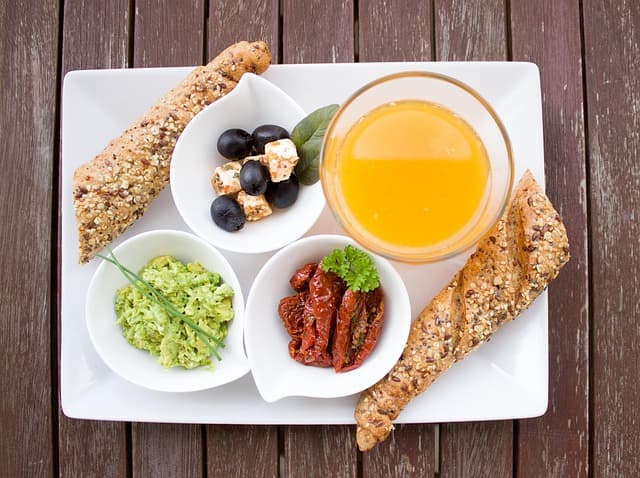
Let’s start with the opposite: doctors say that the worst breakfast is no breakfast at all. Be honest, how often do you skip breakfast because you overslept or simply don’t have time, didn’t think about breakfast the night before, don’t feel like cooking in the morning or don’t have anything to cook (the fridge is empty), simply don’t eat breakfast out of habit or don’t want to eat in the morning, etc.? Do you replace breakfast with morning coffee and a cigarette? Then this article is for you!
So, an unhealthy breakfast consists of coffee and “something sweet,” any fried foods, chips, buns, pastries, “three-story” hamburgers and sandwiches (yes, imagine that), etc. Breakfast should be filling, but not high in carbohydrates or fat, otherwise the pancreas and liver are forced to work twice as hard to process this food. In addition, such a breakfast is processed very quickly, which means that the brain receives a signal that the body is “hungry” again.
What kind of breakfast can be considered healthy?
Therefore, make it a rule to divide breakfast into two stages, in which you drink a glass of plain water at room temperature for the “first” stage — you woke up yourself, so help your stomach “wake up” too.
The “second” stage of breakfast could include:
- Omelet or boiled eggs without salt or oil;
- Dairy products (low-fat yogurt, cheese or cottage cheese, kefir);
- Fresh fruits, vegetables, freshly squeezed juices;
- Cereals (oatmeal, buckwheat, millet, corn);
- Coarsely ground rye bread, toast;
- Muesli.
Thus, cereal + fruit, soft-boiled egg, toast with low-fat cheese, tea is practically the perfect breakfast. You can alternate foods, changing them while adhering to the rule that they must be from the “right” category: for example, you can sometimes replace porridge with fruit with a salad of fresh vegetables, and an egg with a small piece of boiled chicken.
What if you don’t feel like eating in the morning? You need to gradually train yourself to eat breakfast (on average, it takes 10 consecutive days of eating breakfast to develop a healthy habit). It’s great if this is the time for a “second breakfast” — 3-4 hours after your first meal. What to eat if you feel hungry? The same foods you would eat for breakfast (eggs, cottage cheese, vegetable salad) — in this case, you will be able to work calmly until lunch without being distracted by your rumbling stomach.
Delicious breakfasts – make them yourself!
Do you think that a healthy breakfast can’t be tasty? You’re wrong! Even ordinary porridge for breakfast can be varied in such a way that it will be eaten with pleasure. Here are some options for delicious and healthy breakfasts:
- Buckwheat porridge with mushrooms (alternative: with chicken fillet) + fresh vegetable salad (e.g., cucumbers + tomatoes) + toast;
- Oatmeal porridge made with water or low-fat milk + toast with butter + apple;
- Two soft-boiled eggs + a piece of baked low-fat fish + whole grain bread;
- Omelet with vegetables + a handful of nuts + a piece of boiled chicken;
- Scrambled eggs with spinach + fruit and milk smoothie + toast with jam;
- Omelet with bacon and cheese (omelet rolls in lavash) + baked apple with cinnamon or assorted fruit salad (any fresh fruit, cut into pieces and topped with low-fat yogurt);
- Porridge with dried fruit (or a handful of dates) + boiled egg (or omelet) + low-fat yogurt + apple;
- Buckwheat porridge or muesli + toast with low-fat cottage cheese or cheese, sprinkled with herbs + apple or fruit salad;
- Scrambled eggs with tomatoes + soft cheese + grapes + smoothie (fruit and berry puree) with milk or yogurt;
- Piece of dark chocolate + omelet with bacon + fruit or vegetable salad;
- Scrambled eggs with tomatoes + piece of boiled chicken + toast with honey or jam + tomato and cucumber salad.
The breakfast combinations listed are examples. If you have gastrointestinal disorders (existing diseases such as gastritis, pancreatitis, etc.), breakfast should be prepared in accordance with a diet recommended by a doctor, as some foods (e.g., mushrooms, chocolate, etc.) may cause individual intolerance, which could lead to a deterioration in the patient’s health.
Breakfast drink
Nutritionists do not recommend drinking coffee for breakfast: if your health allows, give preference to tea or freshly squeezed juices. However, you should be careful, as in some cases, prolonged consumption of these seemingly healthy drinks can provoke the development of diseases of the gastrointestinal tract.
If you really love tea, choose green tea and hibiscus tea instead of black tea, as they contain much more beneficial substances, bioflavonoids, antioxidants, and vitamins than black tea. Cocoa is an excellent choice: not only is it extremely tasty, but it is also practically on par with invigorating coffee. If you really can’t give up coffee, treat yourself to real brewed coffee rather than instant substitutes, which are definitely not good for your health and well-being.
Such a healthy and delicious breakfast will definitely make you feel full and give you energy for your daily activities. It is perfect for those who are on a diet or simply watching their weight and do not want to gain extra pounds.